English-speaking patient coordinator · Hotel and airport transfers arranged · Free online consultation
Hotel & transfers arranged · Free online consultation
Top surgery – known clinically as chest masculinization or chest reconstruction – removes breast tissue and reshapes the chest to give it a flatter, more masculine outline. For trans men and non-binary people, it often ends years of binding and makes everyday things like clothing, swimming and sport easier.
Dr. Hakki Izmirli performs top surgery in Istanbul for international patients. Every plan starts from your own anatomy: how much tissue there is, how much the skin has stretched, where the nipples sit and what kind of chest you want to end up with. From there, he recommends the technique that fits your body rather than a standard package.
During the operation, the glandular breast tissue and any surplus fat are removed and the remaining skin is redraped over the chest muscle. Depending on your anatomy, the surgeon may also remove extra skin, use liposuction to smooth the sides of the chest, make the areolas smaller, and either graft the nipples to a new position or keep them attached to the tissue beneath.
The choice of technique comes down to four things: chest volume, skin excess, skin elasticity and nipple position. A small, firm chest can sometimes be treated through an incision at the edge of the areola; a larger or looser chest usually needs a longer incision so that the extra skin can be removed and the contour shaped properly.
Top surgery may be right for you if:
A letter from a therapist or psychiatrist is not required. If you already have a report or support letter, just share it with us; if you do not, our informed consent process is sufficient and you will sign a detailed informed consent form before surgery. Before surgery, we review your health history, current medications, smoking, previous operations and your goals, so that the plan is both safe and realistic.
No single technique suits every chest. Dr. Izmirli selects the method after assessing your chest size, the amount of loose skin, where your nipples sit and how elastic your skin is. The options below are the ones used most often; your consultation confirms which one applies to you.
Every technique carries its own risks, and they differ between them. These are set out in full, with how each one is prevented and managed, on the risks and safety page.
Double incision is the most common choice for medium and large chests, and whenever there is noticeable skin excess or sagging.
Two incisions run along the lower border of the chest muscle. Through them, breast tissue and surplus skin are removed and the chest is flattened and contoured. The nipples and areolas are usually removed, trimmed to a more masculine size and placed back as free nipple grafts in a position that suits the new chest.
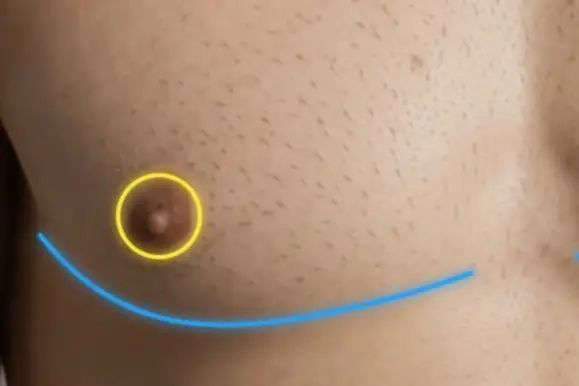
The periareolar approach is an option for smaller chests with only mild skin excess and good elasticity. An incision is made around the areola, tissue is removed through it, and a ring of skin can be taken out to tighten the chest and reduce the size of the areola.
The scar sits at the edge of the areola, where the change in skin colour helps to disguise it. Suitability is decided after examining your chest, either in person or through detailed photos.
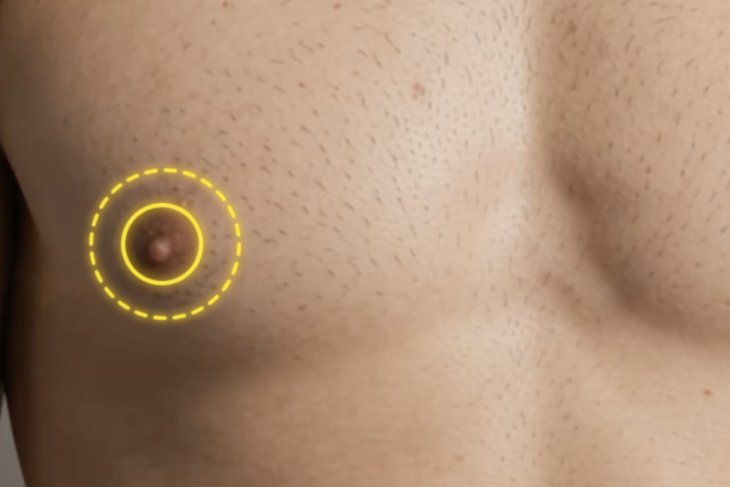
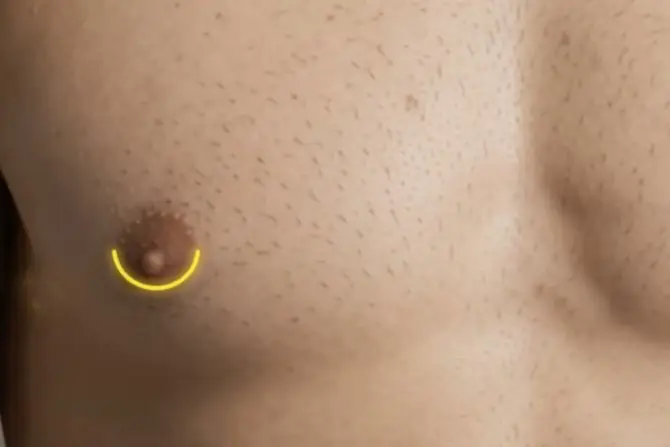
Keyhole surgery is for a narrow group of patients: those with a very small chest and firm, elastic skin. Tissue is removed through a short incision along the lower half of the areola, and no skin is cut away – the skin is expected to tighten on its own over the new contour.
Because the only scar is at the areola border, keyhole gives the least visible result. If there is any real skin excess, however, the chest can look loose afterwards, which is why candidacy is assessed carefully.
The operation takes about 2.5 to 3 hours and you stay one night in hospital. Drains are placed to remove fluid during the first days of healing. Most patients stay in Istanbul for 7 days for check-ups before flying home.
Recovery varies from person to person. Your aftercare continues remotely once you are back home.
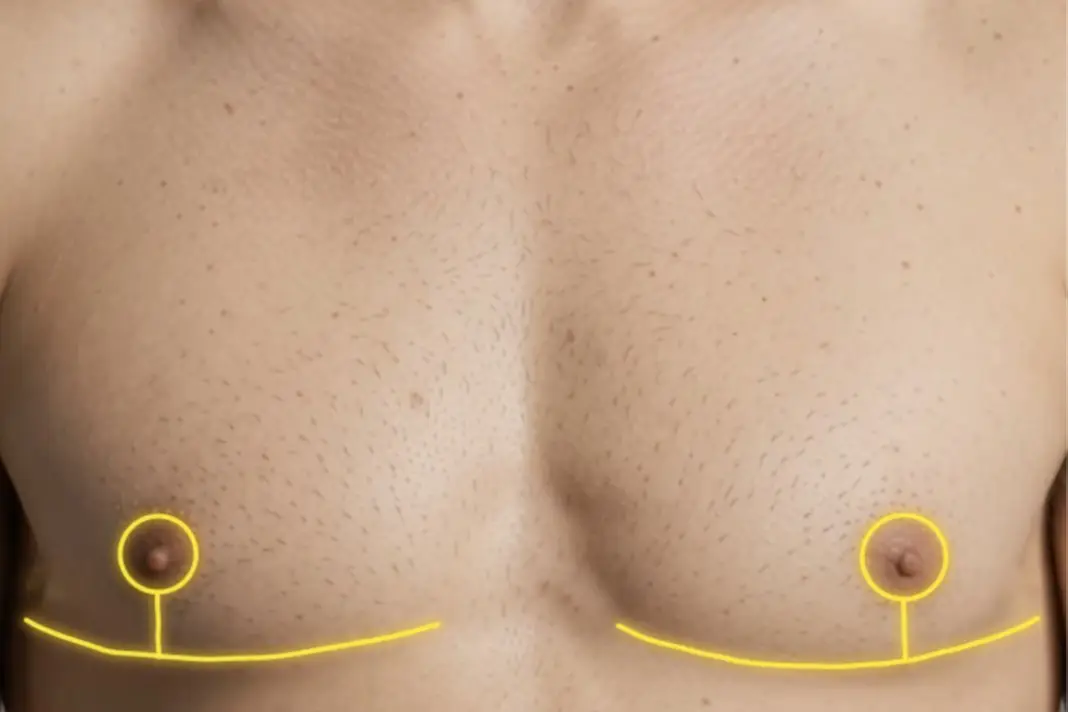
The inverted-T (or T-anchor) technique can suit medium to large chests when keeping nipple sensation is a priority. Breast tissue and excess skin are removed, but the nipple–areola complex stays connected to a small stalk of tissue, called a pedicle, that carries its blood and nerve supply, and is moved up to its new position.
The scar pattern is a horizontal line under the chest plus a short vertical line up to each nipple. Because the pedicle has to remain under the nipple, the chest is usually slightly less flat than after double incision with free nipple grafts. Keeping the nipple attached improves the chance of retaining sensation, but it cannot guarantee it.
Revision surgery corrects something that still bothers you after a previous top surgery. Common reasons include “dog ears” – small folds of skin and fat at the outer end of the scar towards the armpit – leftover fullness under the nipples or at the sides of the chest, a difference between the two sides, wide scars, or nipples that are too large or poorly placed.
Depending on the problem, revision may involve removing extra skin or tissue, liposuction to smooth the contour, scar revision, or adjusting the size and position of the nipples. A scar revision replaces one scar with a new, ideally finer one; it cannot remove a scar completely. Raised or thickened scars are often treated non-surgically first.
The chest keeps changing for months as swelling goes down and scars mature, and some irregularities improve on their own. Revision is therefore usually planned once the tissues have settled. Send us clear photos of your chest and, if possible, details of your first operation, and Dr. Izmirli will tell you what can realistically be improved.
Every chest heals differently, but seeing real outcomes helps you set expectations. You can view Dr. Izmirli’s top surgery before and after results on his TransHealthCare profile, an independent directory of surgeons who provide gender-affirming care.
About the surgeon
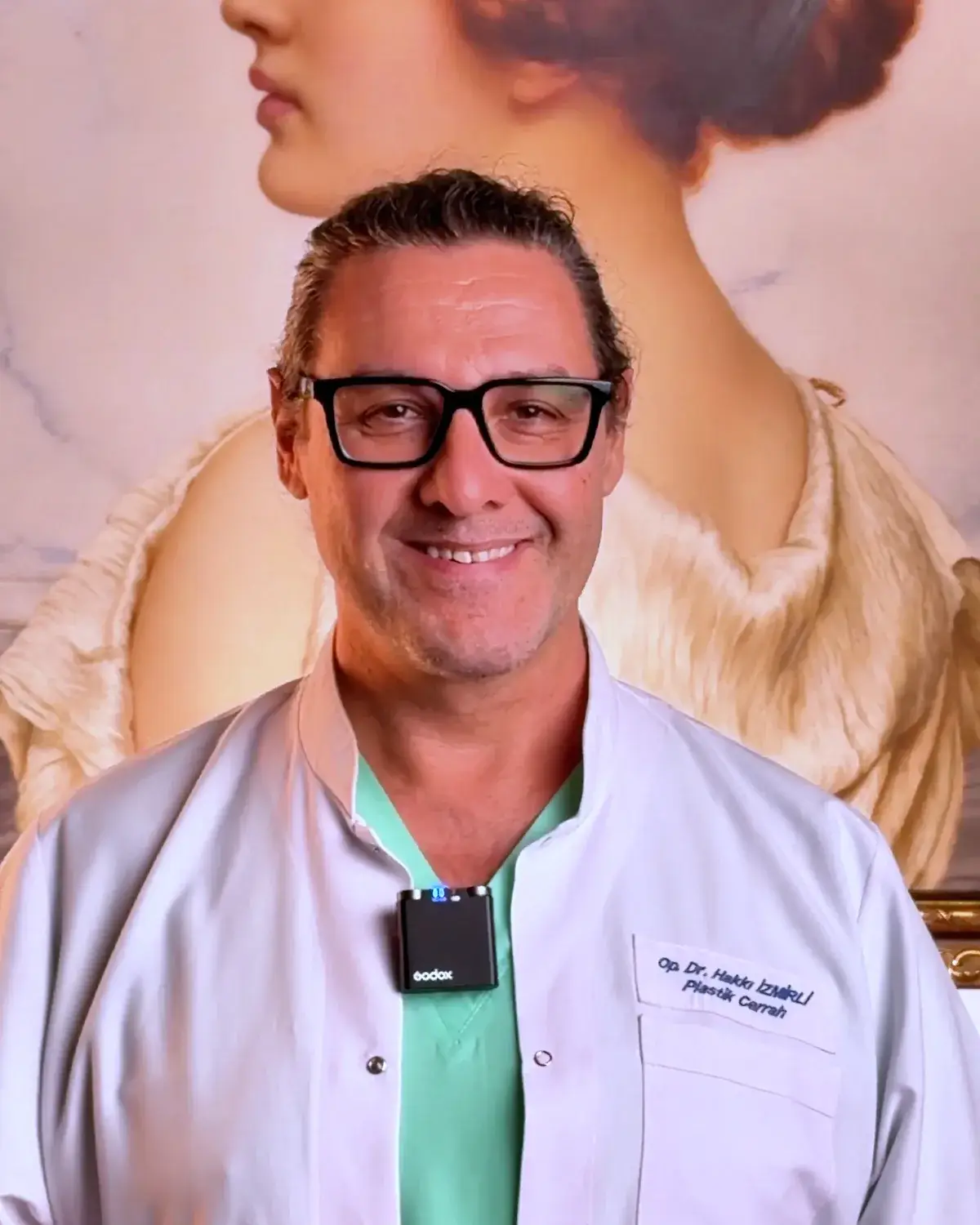
Plastic surgeon with 20 years of experience, based in Nişantaşı, Istanbul. Dr. Izmirli trained at Istanbul University Faculty of Medicine and completed his residency in Aesthetic, Plastic and Reconstructive Surgery at Kocaeli University. His research on free nipple grafting has been published in Aesthetic Plastic Surgery, Plastic and Reconstructive Surgery and JPRAS.
Professional memberships: WPATH (Full Member) · ASPS (International Member) · TPRECD