English-speaking patient coordinator · Hotel and airport transfers arranged · Free online consultation
Hotel & transfers arranged · Free online consultation
Top surgery is a planned operation performed under general anaesthesia, and like any operation it carries risk. Most patients recover without any complication, but an honest understanding of what can go wrong — and of how it is managed — is part of giving informed consent. This page sets out the risks of FTM top surgery, how we reduce them, and what happens if something does go wrong while you are in Istanbul or after you fly home.
Most complications are prevented rather than treated. Before your surgery date is confirmed, we check that you meet the criteria that keep the operation safe:
Your blood tests and pre-operative work-up are carried out at the hospital on the morning of surgery, and your anaesthesiologist reviews them before you go to theatre.
Top surgery is performed in a fully equipped private hospital in Istanbul, under general anaesthesia administered by a consultant anaesthesiologist, with a full operating theatre team. You stay one night as an inpatient so that you are monitored through the first hours after surgery, when bleeding is most likely to show itself. Surgery is never carried out in a clinic room or a day-case setting.
Read more on the double incision top surgery page.
Read more about keyhole top surgery and periareolar top surgery.
Every top surgery technique leaves permanent scars. Your scars will be red or pink and firm for the first few months, and will usually soften and fade over 12 to 18 months. How a scar matures depends largely on your own skin and genetics, not only on surgical technique. A small number of patients develop thickened or keloid scars, which can be treated with injections or silicone therapy.
Silicone scar tape is started 2 to 3 weeks after surgery, once the wounds are fully closed, and we will show you how to use it.
Some patients want a secondary procedure once everything has settled — to refine a scar, correct a dog ear, adjust nipple position or remove residual tissue. This is common in top surgery and is not a sign that the first operation failed. Revision is considered no earlier than 9 to 12 months after your surgery, because tissue continues to settle until then. Minor corrections can be done under local anaesthesia; more extensive revisions require general anaesthesia and one night in hospital.
If you are Dr. Izmirli’s own patient, he does not charge a surgeon’s fee for a revision of his own work. You would be responsible only for the hospital and anaesthesia costs, and for your own travel and accommodation. Revisions carried out under local anaesthesia at the clinic involve no hospital cost at all.
Dr. Izmirli also performs revision surgery for patients whose first operation was carried out by another surgeon. These cases are quoted individually after assessment.
You stay in Istanbul for 7 days. Your first check-ups are at the hospital, and later ones at the clinic, so that bleeding, infection, drain problems and graft healing are picked up while you are still with us. Drains are removed at a check-up before you fly home, once output has fallen enough. Your tie-over dressing is opened on day 5 and your grafts are assessed directly.
If a complication needs treatment during your stay, it is managed in the same hospital where you were operated on.
Follow-up continues remotely. You send photographs by WhatsApp at 1, 3, 6 and 12 months, and you can message us at any point between those checks if something concerns you. If you need to be seen in person at home, we will write to your local doctor with the operative details. Your full recovery timeline is set out on the aftercare page.
Contact a doctor where you are, without waiting, if you have:
We would rather turn a case down than take an avoidable risk. We will not proceed if you are under 18, if your BMI is above 32, if you are unable to stop nicotine for the required period, or if a medical condition has not been assessed and stabilised. If we decline, we will tell you why and what would need to change.
Send us your details and photographs. Dr. Izmirli reviews every enquiry personally and replies within 24 to 48 hours. A video consultation can be arranged before you book.
This page is general information about FTM top surgery and is not a substitute for a personal medical consultation. Your own risks depend on your anatomy, medical history and the technique chosen.
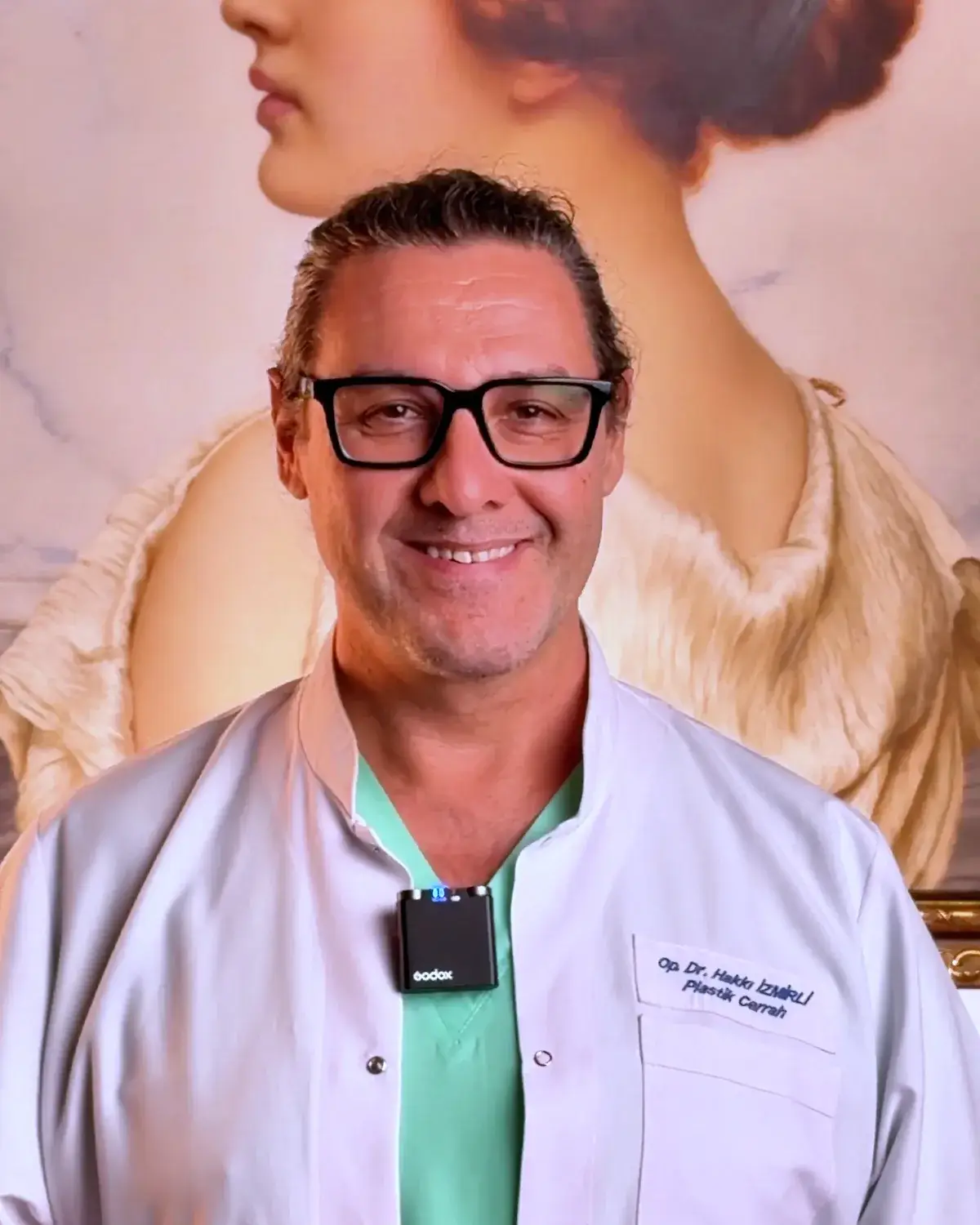
About the surgeon
Plastic surgeon with 20 years of experience, based in Nişantaşı, Istanbul. Dr. Izmirli trained at Istanbul University Faculty of Medicine and completed his residency in Aesthetic, Plastic and Reconstructive Surgery at Kocaeli University. His research on free nipple grafting has been published in Aesthetic Plastic Surgery, Plastic and Reconstructive Surgery and JPRAS.
Professional memberships: WPATH (Full Member) · ASPS (International Member) · TPRECD